Mudge
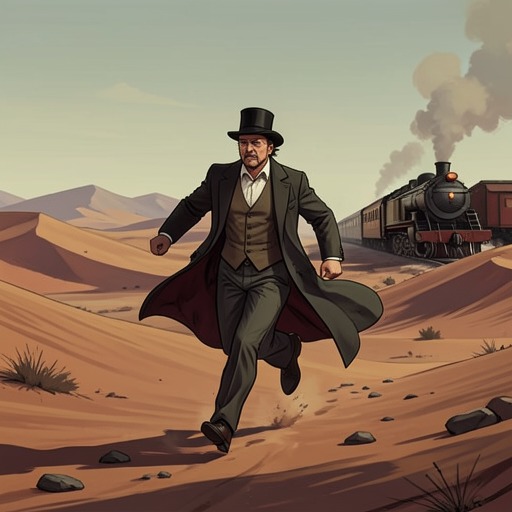
Around the World in Eighty DaysMudge is an American land-craft owner whose sail-rigged sledge gives Phileas Fogg’s party a way to continue east after the disrupted rail journey leaves them behind schedule. He turns an earlier offer, refused by Fix, into a practical route from Fort Kearney to Omaha: a fast crossing of snow-covered plains that reconnects the travellers with the railway. His brief appearance makes him crucial not through grand gestures but through a vehicle, a bargain, and the skill to carry it through.
Identity and Introduction
Mudge enters the story at Fort Kearney, where the party’s interrupted train journey has left Phileas Fogg twenty hours behind. Fix explains that eight hours must be regained and points out a man who had approached him during the night with a proposal Fix had refused: travel by a sledge with sails. The man is Mudge. Fogg does not accept the suggestion at a distance; after Fix identifies its source, he goes over to Mudge, and the two enter a hut to inspect the vehicle.
The episode establishes Mudge through his practical role. He owns the land-craft, makes the offer, and is confident that he can transport the party to Omaha in a few hours. The text identifies him as an American but supplies no further history or personal background. His importance lies in the expertise and means that make an unconventional journey possible at a moment when the regular route cannot meet Fogg’s timetable.
The Sledge and the Bargain
The craft Mudge shows Fogg is a frame resting on two long beams, raised slightly at the front like sledge runners and large enough for five or six people. A mast, secured with metal lashings, carries a large brigantine sail; an iron stay supports a jib, while a rudder at the back guides the vehicle. The arrangement is described as a sledge rigged like a sloop. It is not presented as a novelty invented for the emergency: in winter, when snow blocks trains, such sledges make rapid journeys across the frozen plains between stations.
The machine’s speed depends on conditions as well as construction. With several sails and the wind behind them, these vehicles can skim over the prairies as fast as, or faster than, express trains. On this occasion the wind is fresh and favourable from the west, and the snow has hardened. Mudge’s confidence that he can get Fogg to Omaha within a few hours is therefore tied to specific conditions, not simply to a promise of speed. Fogg readily makes a bargain with him, choosing the available land route because it offers a chance to recover time that cannot be regained by waiting for ordinary rail service.
The Journey to Omaha
At eight o’clock the sledge is ready. The passengers wrap themselves in travelling-cloaks, the two great sails are hoisted, and the craft slides over the hard snow at forty miles an hour. The distance from Fort Kearney to Omaha is at most two hundred miles as the crow flies; with the wind holding, the journey might take five hours. These figures make clear both the scale of Mudge’s undertaking and the narrow margin on which the plan depends: the projected arrival by one o’clock assumes that no accident occurs.
Mudge pilots the vehicle through the journey. Around noon, landmarks tell him that he is crossing the Platte River and, he judges, within twenty miles of Omaha. Less than an hour later he leaves the rudder and furls the sails; the sledge continues for half a mile under the momentum already built up before finally stopping. Mudge points out the snow-covered roofs and announces their arrival. The controlled finish complements the earlier display of speed: the party has not merely crossed the plains quickly but reached its destination under Mudge’s direction.
Arrival and Narrative Role
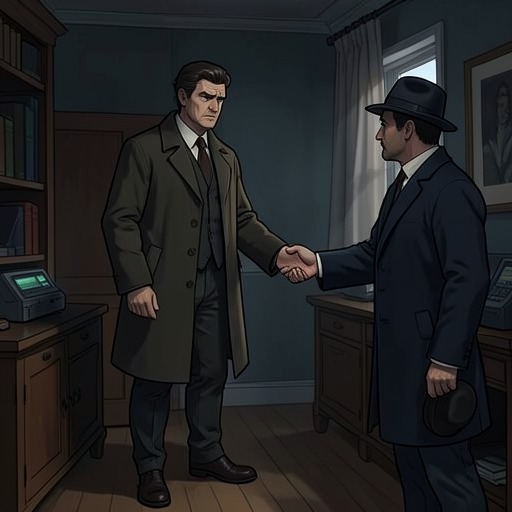
At Omaha, Passepartout and Fix jump down and stretch their stiffened limbs, then help Fogg and Aouda descend. Fogg generously rewards Mudge, while Passepartout warmly grasps his hand. The gesture marks a direct human acknowledgment of the service rendered; the party then heads to the railway station, with no time to see the town. Mudge’s part in the journey ends there, but the result of his intervention is immediate: the travellers reach a station with frequent trains eastward.
Omaha is the terminus of the Pacific Railroad proper and connects with Chicago through the Chicago and Rock Island Railroad, which runs east and passes fifty stations. A train is ready when Fogg’s party arrives, and they have only enough time to board. Mudge’s sledge thus functions as a bridge between a broken rail itinerary and the next available rail connection. The episode also continues the journey’s pattern of dependence on changing transport systems: when the railway falls short, speed comes from a locally available means of travel; once it has delivered the party to Omaha, the railway can carry them onward again. Mudge is a minor character, but his practical intervention turns a proposed alternative into a completed crossing and restores the possibility of continuing the race against time.